
10 Small-Machine Businesses You Can Start With $1,000 or Less
A budget-first guide for people who want a physical product business and are considering a small machine. The machine creates inventory; the customer creates the business.
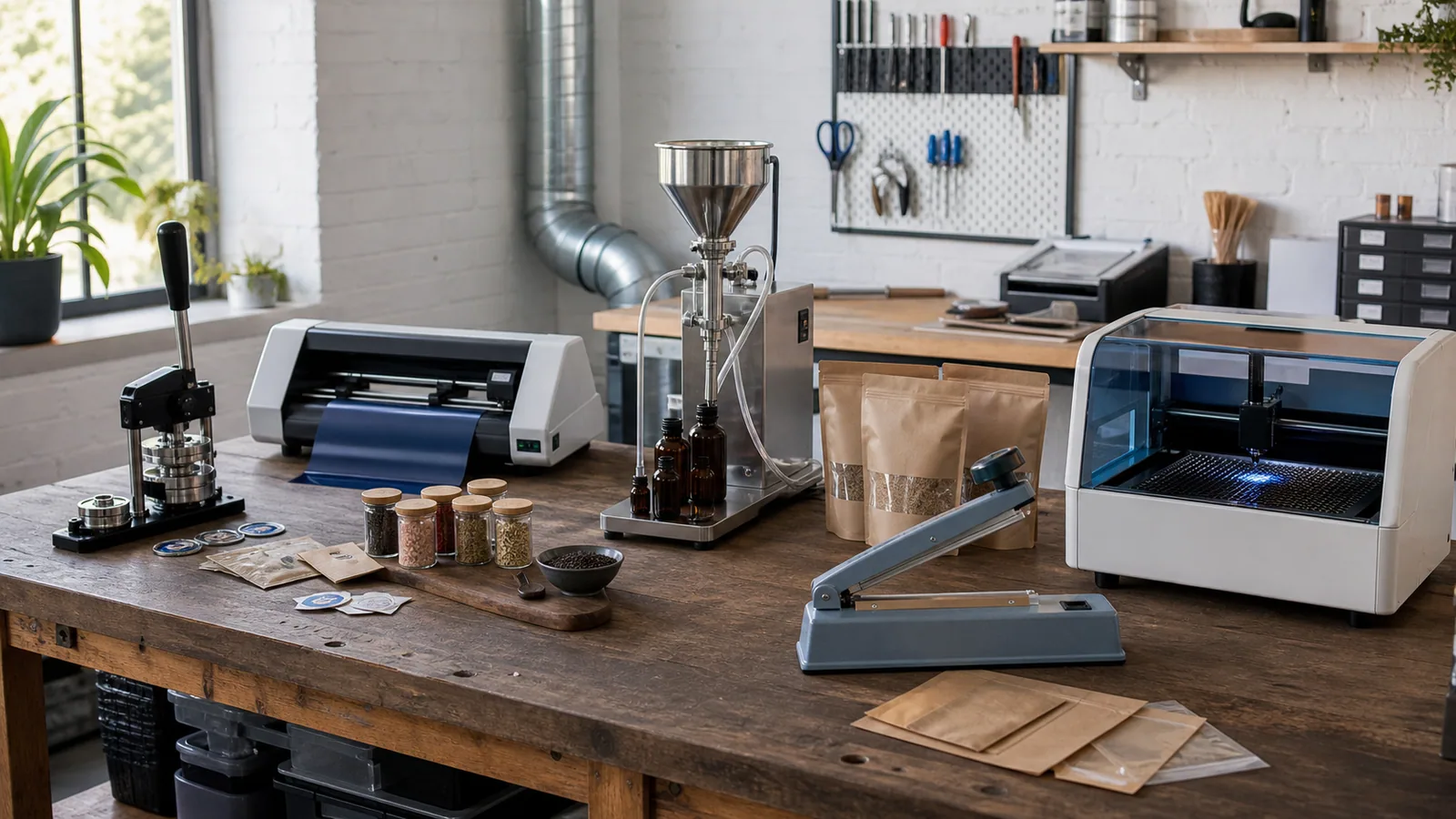
You have $1,000.
Not $50,000 for a factory. Not enough money to lease a warehouse, hire five employees, and order a container of inventory from overseas. Just $1,000.
That sounds limiting until you realize how small some production equipment has become. Machines small enough to sit on a workbench can press oil, seal drink cups, make custom badges, cut vinyl, fill bottles, grind spices, engrave products, form pastry shells, and package finished goods.
But there is a trap. Buying the machine is the easy part. Finding something people will actually pay you for is the business.
A machine creates inventory. A customer creates a business.
A $300 machine with no customers is an expensive object taking up space in your garage. A simple machine connected to a repeat customer — perhaps a local restaurant, school, retailer, event company, or online niche — can be the beginning of something much bigger.
This guide looks at the business behind each machine: what you could sell, who might buy it, what else you would need, and what you should prove before spending your money. For a broader equipment view, compare our machines to start a small business guide; this page stays focused on a roughly $1,000 starting budget.
$1,000 is a starting budget, not necessarily your total business cost. Shipping, import duties, ingredients, packaging, licenses, safety equipment, samples, and working capital can push the real startup cost higher. The goal is not to spend the entire $1,000. It is to find the smallest amount needed to test whether somebody wants what the machine can make.
Ten machines — and the mistake to test before each purchase
Business Dash walks through the equipment behind this budget-first research guide. The article adds buyer, cost, compliance, and validation context.
Quick comparison: 10 small business machines
Use this table as a first-pass filter. Complexity describes the business around the machine, not only how difficult the equipment looks to operate.
| Machine | Possible business | Best first customers | Complexity | Main thing to validate |
|---|---|---|---|---|
| Mini oil press | Small-batch specialty oils | Specialty food buyers, local stores, restaurants | Medium–High | Food demand and compliance |
| Cup sealing machine | Sealed drinks or bubble tea | Events, students, offices | Medium | Location and drink demand |
| Badge maker | Custom pins and badges | Schools, clubs, events | Low | Repeat or bulk orders |
| Vinyl cutter | Decals, signs, apparel graphics | Local businesses | Low–Medium | Local B2B demand |
| Manual filling machine | Bottled sauces, cosmetics, or compatible products | Retail and wholesale | Medium–High | Product demand first |
| Spice grinder | Branded seasoning or spice blends | Consumers, restaurants | Medium–High | Differentiation |
| Laser engraver | Personalized products or signage | Businesses, gifts, events | Medium | Niche and material compatibility |
| Tartlet shell machine | Tartlets or mini pie shells | Bakeries, cafés, caterers | Medium–High | Wholesale demand |
| Impulse heat sealer | Packaged snacks, spices, or small products | Retail and local markets | Low | Product demand |
| Dough sheeter or pasta machine | Fresh pasta or noodles | Restaurants and local food buyers | Medium–High | Repeat buyers and shelf life |
Mini Oil Press Machine
There is something unusually easy to understand about this business. Seeds go in. Oil comes out. And the finished product already has a market people recognize.
A compact oil press can potentially work with inputs such as sesame, sunflower seed, peanuts, or other suitable oilseeds depending on the specific machine. Never assume a listing can process every seed — verify compatibility, output, voltage, and food-contact materials with the supplier.
The interesting business is not simply selling cooking oil. That puts you against enormous established brands. The opportunity is more likely to be something specific: fresh sesame oil for a particular cuisine, locally sourced peanut oil, small premium bottles, pressed-to-order oil, an ingredient sold to restaurants, or another specialty position where freshness and origin actually matter.
Your customers could be local households, specialty food stores, restaurants, farmers-market shoppers, or online buyers — depending on what local food regulations allow.
And this is where the $1,000 challenge becomes important. The machine might fit your budget. The business might not. You still have seeds, filtering, bottles, caps, labels, cleaning, storage, testing, possible shelf-life considerations, food-business requirements, and wasted batches.
Before buying an oil press, find out what people around you are currently buying. Visit specialty stores. Talk to restaurant owners. Compare bottle sizes and prices. Find out which oils are difficult to source locally. If nobody cares that your oil is fresher, local, or different, the machine does not create that demand for you.
View the Mini Oil Press MachineCup Sealing Machine
A cup sealing machine is a good example of why we should think about the business model, not the equipment. The machine does one job: it applies film over the top of a compatible cup.
Put it inside the right business and it becomes part of a bubble-tea stand, iced-coffee concept, juice brand, event beverage business, dessert drink pop-up, or mobile drinks operation.
The biggest mistake would be seeing a video of perfectly sealed colorful drinks and immediately buying the machine. The important question is: where are the drinks going to be sold? A brilliant drink concept in the wrong location can fail. An ordinary drink in front of hundreds of thirsty students every afternoon can be a very different business.
For someone working with a $1,000 budget, test this backwards. Develop two or three drinks first. Calculate the ingredients and cup cost. Sell them using ordinary lids at a small event, market, office, school-area location where permitted, or another controlled test.
If buyers respond, sealing equipment becomes an operational upgrade — not a gamble. Events, parties, university areas, and temporary pop-ups can make it possible to test demand without immediately taking on rent. Food permits, sanitation, and local rules need to be checked before selling.
View the Cup Sealing Machine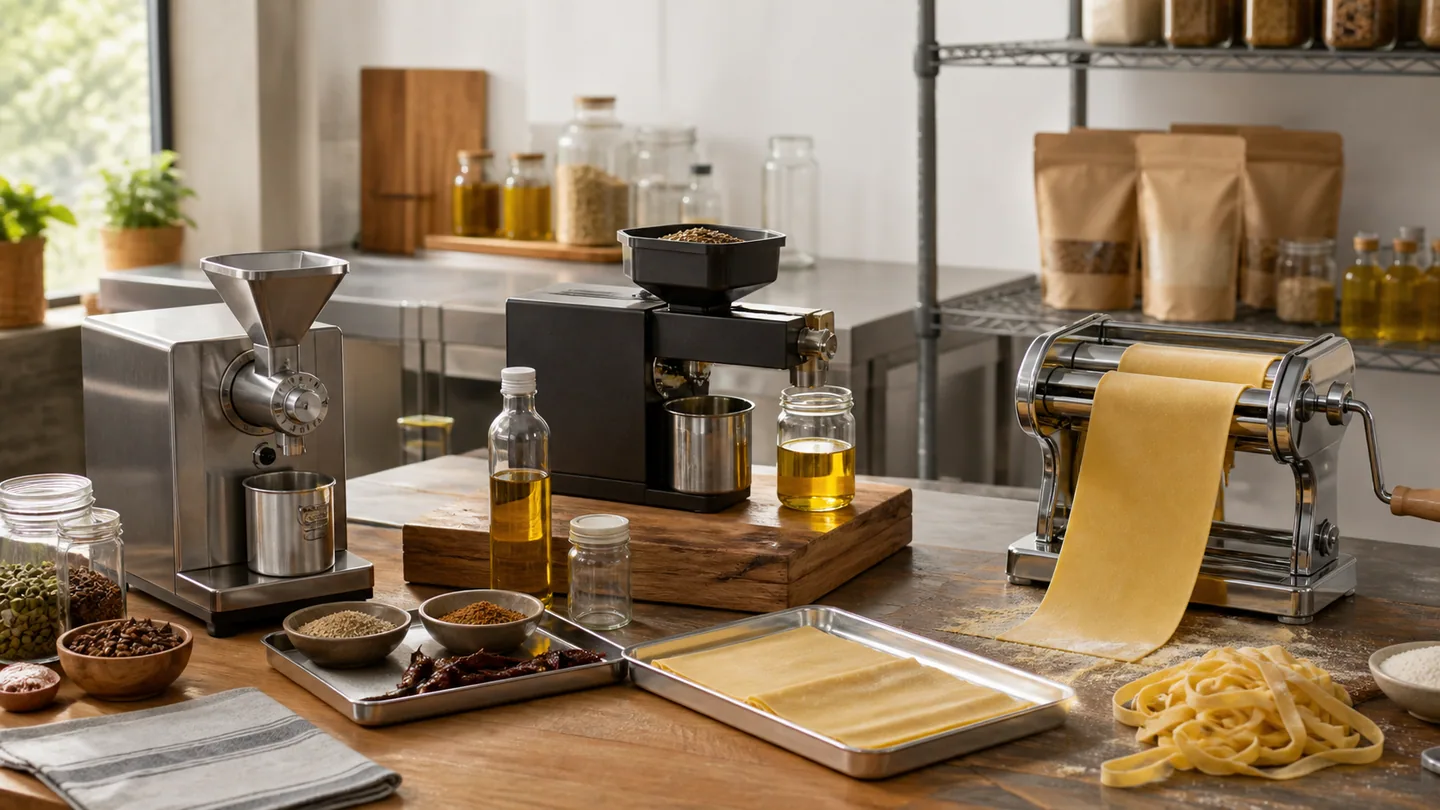
Badge and Button Maker
This may be one of the least impressive-looking machines on this list. That is part of what makes it interesting. A badge maker does not need a large workshop, many versions are manually operated, and you are not dealing with complicated ingredients, refrigeration, or industrial power.
You combine printed artwork with button components and press them into finished pins or badges. The trick is not making badges. Anyone can make badges. The business is getting access to people who need 50, 100, or 500 badges at once.
Think school clubs, conferences, employee events, bands, conventions, birthday businesses, sports groups, local brands, fundraising events, and organizations. One customer ordering 200 customized badges is much more interesting than trying to convince 200 different strangers to buy one badge each.
You can also develop designs for specific communities and sell them online, but that market depends heavily on design quality, audience building, and avoiding copyrighted material.
Your startup setup may need more than the press: printing, paper cutting, blank badge components, design software, and packaging all need to be considered. But this is an idea you can validate almost before spending anything. Create digital examples, show them to potential buyers, offer an introductory bulk order, and see whether anyone reaches for their wallet.
View the Badge and Button MakerVinyl Cutting Plotter
If you want to build a small machine business around local companies rather than internet trends, a vinyl cutter deserves a close look.
These machines cut shapes and lettering from adhesive vinyl and other compatible materials. Depending on the machine and setup, possible products include lettering, decals, signs, and heat-transfer graphics. That creates several potential offers: shop-window lettering, opening-hours stickers, vehicle decals, wall graphics, safety labels, product stickers, simple signage, custom names, and — with additional equipment — apparel graphics.
The local B2B angle is especially interesting. Drive through almost any commercial area and count how many businesses have windows, doors, vans, walls, counters, and displays carrying vinyl graphics. Instead of competing with thousands of sellers worldwide, you can approach businesses within a few miles of you.
The machine is not the entire learning curve. You need to understand design preparation, cutting settings, weeding, transfer tape, surfaces, and, in some jobs, installation. Material waste while learning also costs money.
The smartest starting point may be one narrow offer, such as opening-hours and storefront vinyl for local cafés and salons. That is easier to sell than saying you make everything with vinyl. Once the workflow is repeatable, you can expand.
View the Vinyl Cutting Plotter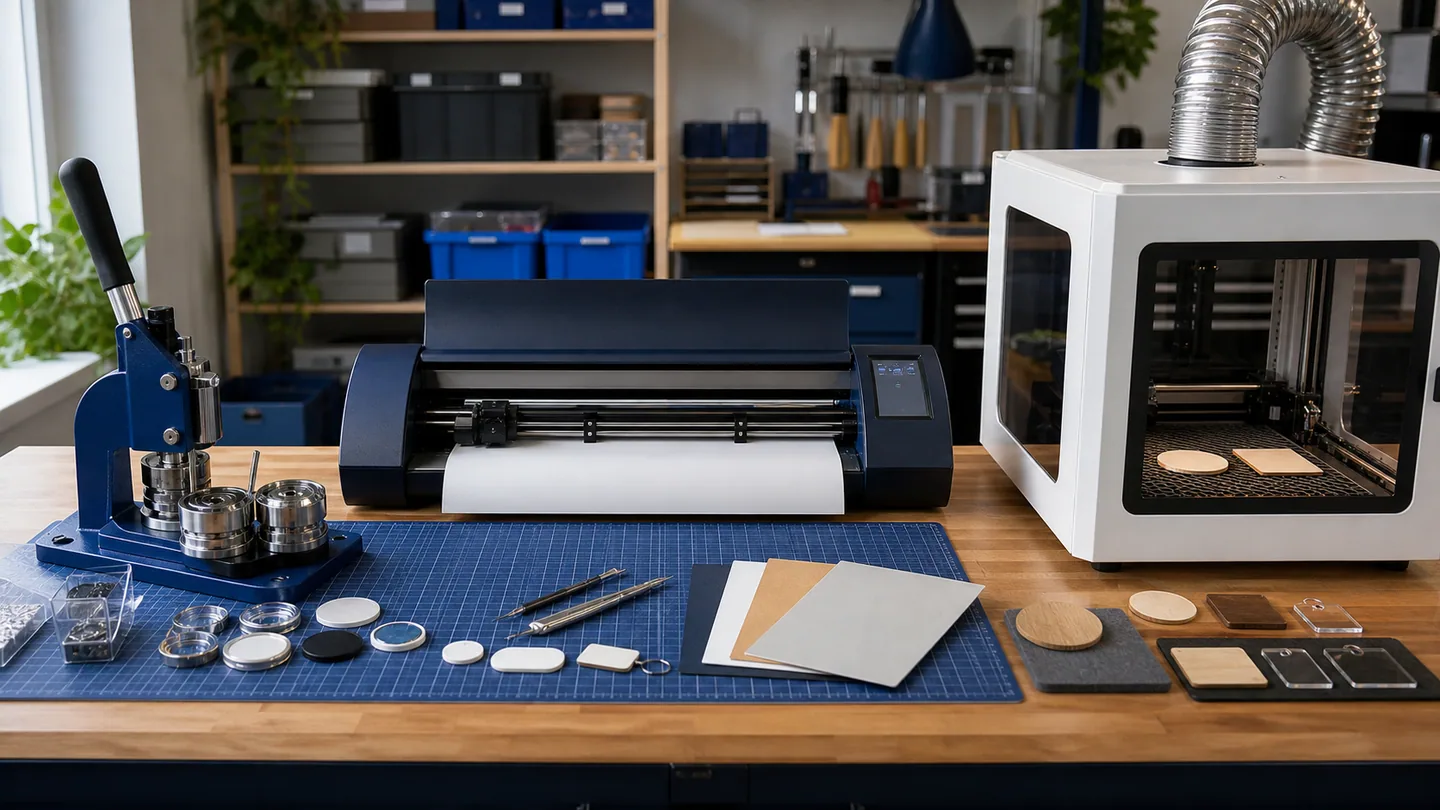
Manual Liquid and Paste Filling Machine
A filling machine does not create a product. It makes an existing product easier and more consistent to package.
Depending on the design, a manual filler may be suitable for certain compatible liquids or pastes such as sauces, oils, creams, shampoos, or similar products. Material compatibility, food-contact requirements, viscosity range, and cleaning procedures must be checked for the exact machine.
That means dozens of possible businesses can sit behind the same machine: hot sauce, honey, dressings, liquid soap, certain cosmetic products, specialty condiments, or cleaning products. But that flexibility can also become a distraction. Do not buy a filler and then ask what to put in it. Decide what you want to sell first.
A manual filler becomes useful when hand-pouring bottles is already slow, inconsistent, or messy. Imagine you have tested a local hot-sauce brand and suddenly need to fill 150 bottles for a weekend market. That is an operational problem a small filler might solve.
The higher-risk part is everything that happens before filling: formulation, safety, sanitation, labeling, packaging compatibility, and any applicable food, cosmetic, or chemical regulation. The equipment should come after product validation.
View the Manual Liquid and Paste Filling Machine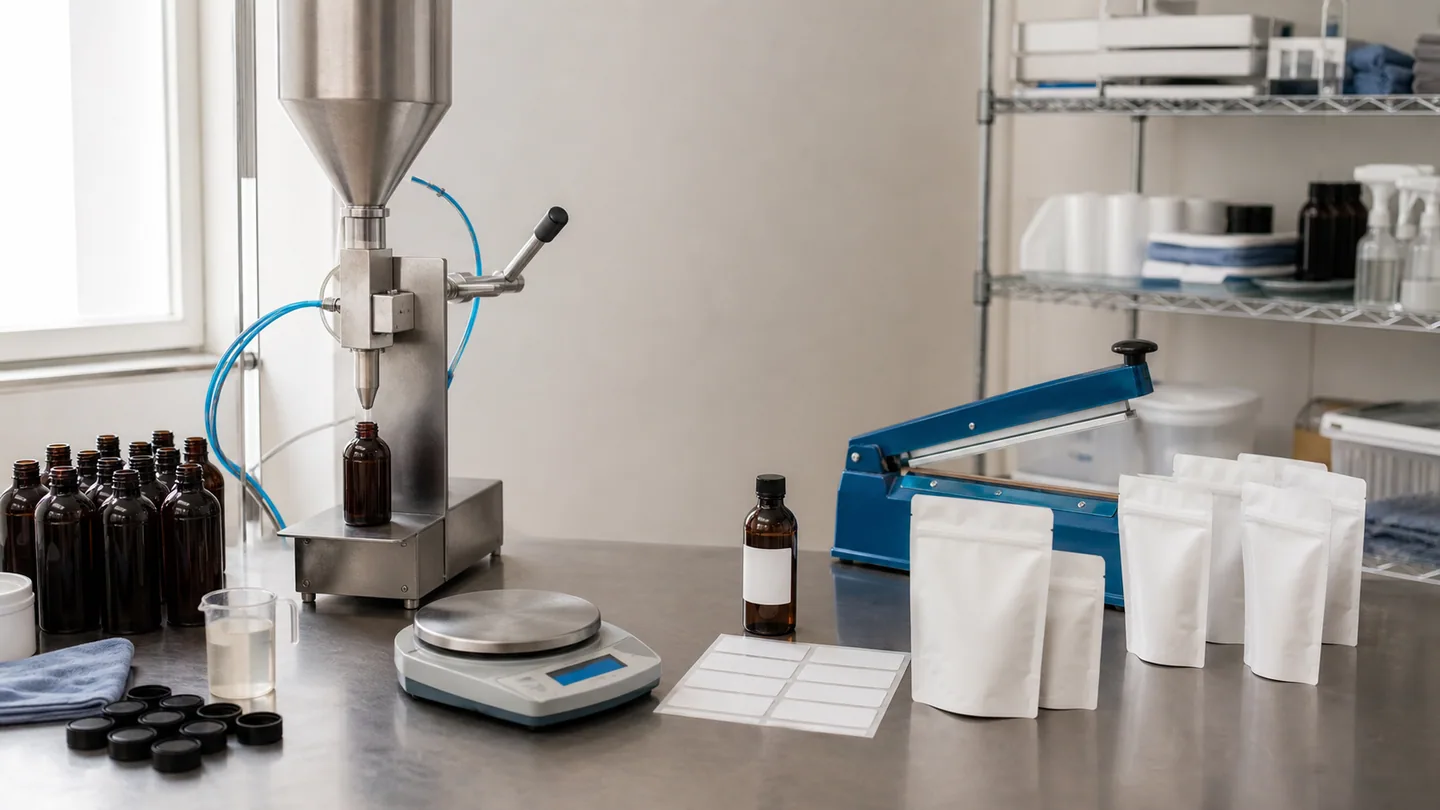
Spice Grinding and Packaging Setup
Walk into almost any supermarket and you will see the opportunity — and the problem. There is enormous demand for spices. There is also enormous competition.
A small spice grinder can process suitable dry spices into powders or blends, while packaging equipment can turn them into retail-ready portions. But starting another anonymous bag of chili powder is not much of a strategy.
The stronger opportunities are specific: a blend for one regional cuisine, restaurant-size seasoning packs, a BBQ rub aimed at one cooking style, salt-free mixes, specialty chili blends, freshly ground spices sold locally, private-label seasoning for cafés or meat shops, or recipe kits.
The advantage is repeat purchasing. If somebody genuinely likes a seasoning, they eventually run out. That is different from selling something that may be purchased only once.
Food businesses bring additional responsibilities. Ingredient sourcing, contamination control, allergens where applicable, moisture, batch consistency, labels, packaging integrity, and local food rules all matter.
Do not spend your first $1,000 trying to launch twelve flavors. Develop one or two blends, make small compliant test batches, get them into people's kitchens, and see if anybody comes back asking for another packet. That second purchase tells you much more than compliments from friends.
View the Spice Grinding and Packaging SetupSmall Laser Engraving Machine
Laser engravers have become one of the most recognizable desktop manufacturing machines because they can turn ordinary objects into personalized products.
Depending on the laser type and power, compatible materials can include certain woods, leather, paper, acrylic, and other materials. Material capability varies significantly by machine — especially when metal is involved — so the exact unit needs to be checked before assuming what it can engrave or cut.
The obvious business is personalized gifts. The more interesting business may be local B2B: table numbers for restaurants, branded wooden items, name plates, QR-code signs, office signs, hotel or event items, corporate gifts, property tags, and small product labels. Wedding and event businesses are another possible source of repeat work.
The danger is falling into the generic marketplace trap: buying the same machine as thousands of other sellers and producing the same signs with the same downloaded designs. The machine is flexible. Your market should not be. Start by becoming exceptionally useful to one customer group.
Safety also matters. Ventilation, fire precautions, and compatible materials are not optional details, and unknown materials should never be lasered without checking whether they can release hazardous fumes.
View the Small Laser Engraving MachineTartlet or Mini Pie Shell Forming Machine
This machine could easily be overlooked, and it may be more interesting as a wholesale production business than as another bakery.
A tartlet forming machine helps repeatedly shape pastry into small shells. Imagine approaching cafés, bakeries, hotels, caterers, and dessert companies — not to compete with them, but to supply them.
A café may want to sell individual lemon tarts without having an employee spend hours manually forming hundreds of shells. A caterer might regularly need miniature dessert bases. A bakery could want a standardized shell ready for filling.
That changes the business question from whether individual people will buy your pies to whether you can become a supplier to businesses that already have customers. That B2B model deserves serious investigation.
You could also make finished tartlets or mini pies yourself, but food production adds food-business rules, ingredients, shelf life, storage, packaging, and possibly refrigeration.
The best validation test does not require the machine. Make a small batch manually. Take professional samples to local cafés and caterers. Ask what shell sizes they use, what they pay, how many they need, and what frustrates them about their existing supply. Those conversations may tell you which machine you actually need — or whether you need one at all.
View the Tartlet or Mini Pie Shell Forming Machine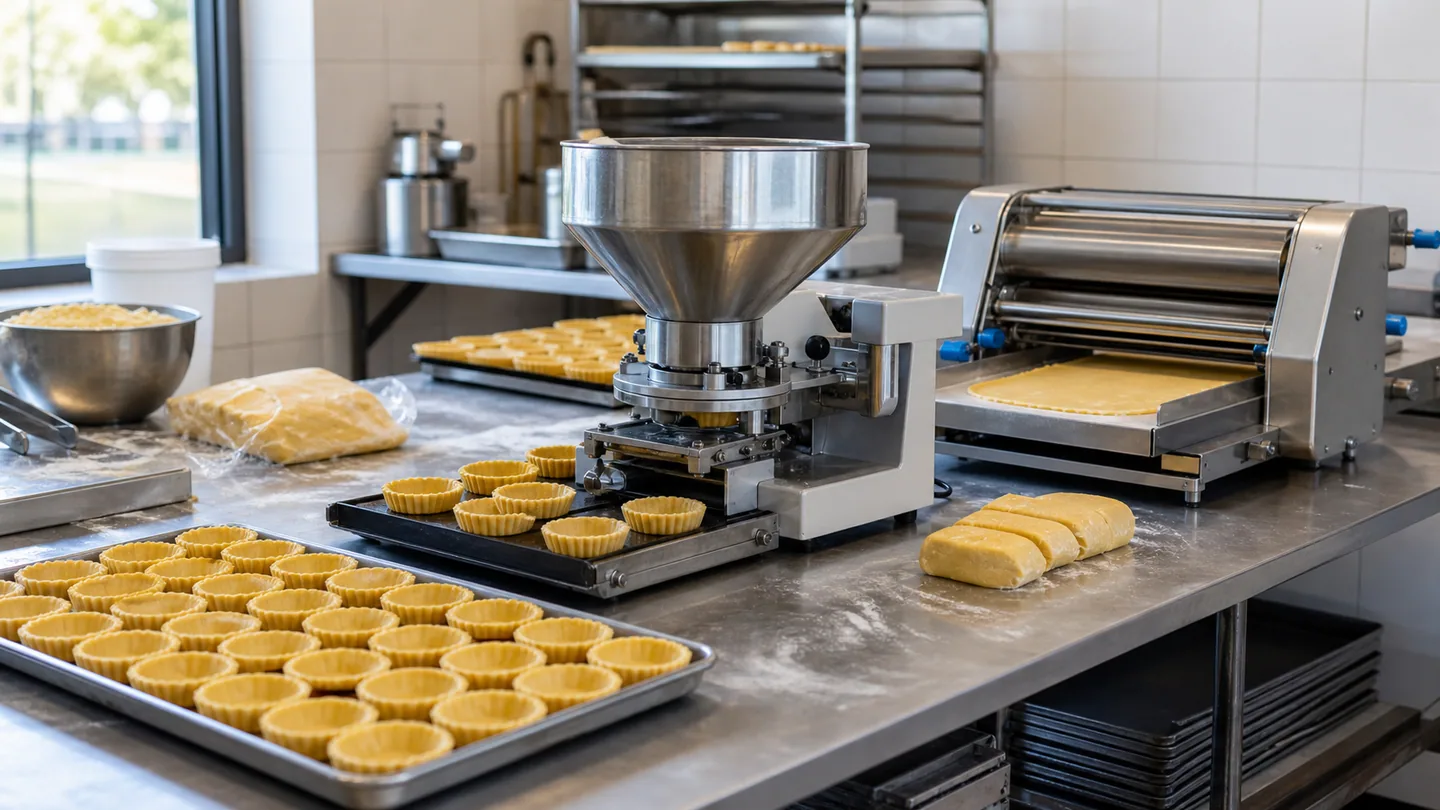
Impulse Heat Sealer Packaging Setup
This may be the cheapest-looking idea on the list. It may also be one of the most useful.
An impulse sealer creates a sealed edge on compatible packaging materials. But the heat sealer is not the business. The thing inside the bag is the business.
That could be spices, tea blends, dried foods, snacks, craft supplies, small hardware kits, samples, seeds, accessories, or another product appropriate for the chosen packaging.
A sealer can make a small operation look more professional because customers receive a finished package instead of a loosely closed plastic bag. It also pairs naturally with several other machines in this article: spice grinder plus heat sealer, or another small food-production setup plus packaging.
Packaging equipment may be something you buy after discovering your core product rather than making it the center of the business. If you already have access to an interesting product — perhaps something produced locally but poorly packaged — this can be worth investigating.
Packaging is often where a commodity starts becoming a recognizable brand. Just do not confuse better packaging with demand. Beautiful bags filled with a product nobody wants are still unsold inventory.
View the Impulse Heat Sealer Packaging SetupMini Dough Sheeter, Pasta, or Noodle Machine
Fresh pasta and noodles are products that do not require inventing an entirely new market. People already eat them. Restaurants already buy them. The question is whether you can make a version that a specific group of customers prefers buying from you.
A compact sheeter or pasta/noodle setup can help produce more consistent dough thickness and reduce some manual work in small-batch production. Possible products include fresh pasta sheets, noodles, and other compatible dough products depending on the specific machine.
Resist the urge to start by building a consumer brand with ten shapes and flavors. There may be a simpler route. Find five independent restaurants. Ask whether they make pasta themselves or buy it, what shapes they use, and what problems they have with consistency, minimum quantities, freshness, or delivery.
One restaurant willing to place a recurring weekly order can be more valuable at the beginning than hundreds of social-media followers.
Food safety, refrigeration or drying, shelf life, ingredients, cleaning, and local rules need to be part of the plan from day one. Before ordering a machine from overseas, confirm power requirements, dimensions, parts availability, and exactly what dough types it is designed to process.
View the Mini Dough Sheeter, Pasta, or Noodle MachineWhich machine would I choose with only $1,000?
Do not choose based on which machine appears capable of making the most products. Choose based on which one lets you prove demand while risking the least money.
For someone who wants lower regulatory complexity, the badge maker, vinyl cutter, and laser engraver deserve investigation first.
For someone with food-industry experience or an existing customer network, the spice business, pasta or noodle setup, oil press, or tartlet-shell business may become more interesting — but food compliance and operating requirements increase the complexity.
For someone who already has a product, the manual filler or heat sealer may be the smartest purchase because those machines improve an operation that already exists.
A machine should remove a bottleneck. It should not become the reason you invent a business you never wanted to run.
The $1,000 mistake almost everyone makes
Imagine seeing a machine listed for $620. You have $1,000, so you think you can afford it. Not necessarily.
Your real calculation may include the machine, shipping, import duties, raw materials, packaging, replacement parts, electricity, workspace, test batches, defects, safety equipment, labels, licensing, marketing, and money needed to make the second production run.
That is why machine price and startup cost are not the same thing. The best $1,000 business may involve spending only $250 on initial equipment. Cash left in the bank gives you room to learn.
Use Plangate's startup-cost calculator to keep the machine price separate from the full cash requirement.
Frequently asked questions
Can you really start a manufacturing business with $1,000?
You can start certain forms of micro-manufacturing or small-batch production with a $1,000 equipment budget, particularly when the operation can begin from a home workshop or small workspace. But $1,000 should not automatically be treated as the complete startup cost. Materials, packaging, shipping, permits, utilities, and working capital also need to be considered.
What is the best machine to start a small business?
There is no universal best machine. The best choice is equipment that produces something a reachable customer already wants at economics that make sense. A cheap machine serving repeat B2B customers can be more valuable than sophisticated equipment producing a crowded consumer product.
What small machines can be used for a home business?
Depending on local zoning, safety, and business rules, compact equipment such as badge makers, vinyl cutters, certain laser engravers, heat sealers, and some small production tools can potentially fit a home or garage operation. Food production and equipment creating fumes, heat, noise, or other hazards may have additional requirements.
What business can I start with $1,000?
Possible options include service businesses, digital businesses, and small product businesses. If you specifically want to manufacture or customize physical products, a small machine may let you begin with limited production capacity while validating demand before scaling.
Should I buy a business machine from AliExpress?
Price should be only one part of the decision. Check voltage and plug compatibility, shipping cost, duties, spare parts, warranty, consumables, documentation, safety requirements, realistic output, reviews, and supplier support. For food-contact equipment, confirm that materials and documentation meet the requirements of your market.
Do small manufacturing businesses need licenses?
Requirements depend on the product and location. Food, cosmetics, chemicals, and certain other categories may have substantial rules around production, safety, and labeling. Check the requirements that apply where you operate before selling products.
Which small machine business is easiest for a beginner?
Customization businesses such as badges or vinyl products can have fewer product-safety and shelf-life complications than food businesses, although they still require design, production, and sales skills. Easy to operate should never be confused with easy to sell.
Sell before you scale
There is a strange psychological effect when you watch a manufacturing machine. Raw material enters one side. A finished product comes out the other. It feels like you are watching money being created.
You are not. You are watching inventory being created. It becomes a business only when someone wants to buy it.
If one of these machines has you reaching for your credit card, do something first. Find the product. Find the customer. Run the numbers. Then decide whether the machine deserves your money.
That is exactly what Plangate is built to help you do: find a business, validate demand, research the market, understand the numbers, and build the plan before committing to equipment.