
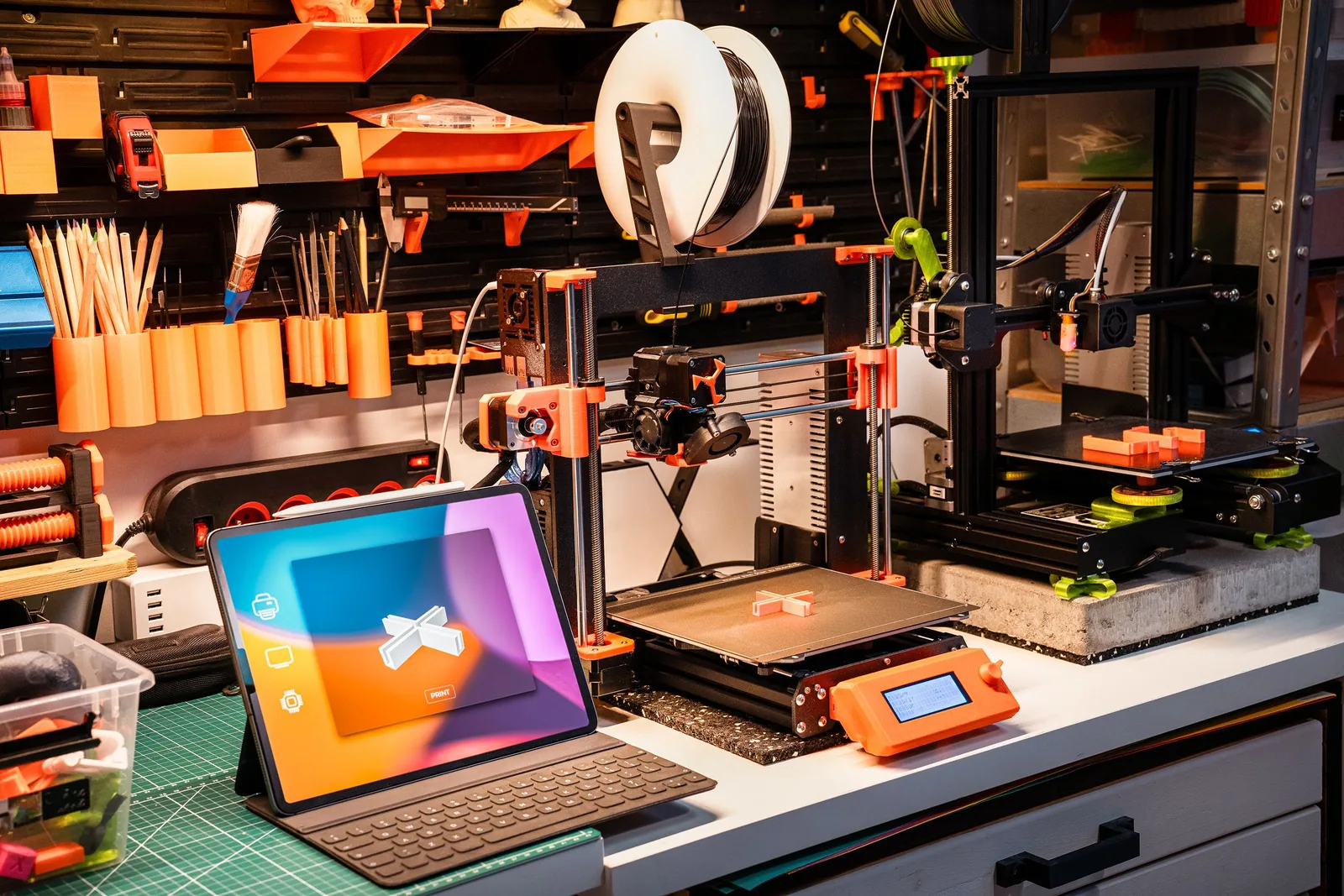
Manufacturing does not automatically mean a large factory. U.S. Census Bureau County Business Patterns counted 284,452 manufacturing establishments in 2023. Of those, 102,567 had fewer than five employees and 194,583 had fewer than 20 employees. In other words, roughly two-thirds of U.S. manufacturing establishments were very small operations by headcount. That is a useful reality check if your mental picture of manufacturing is an assembly line with hundreds of workers.
The opportunity for a small founder is rarely to out-produce a giant factory. It is to make a narrower product, serve a specific customer, customize faster, work in smaller batches, or become a dependable local supplier. That is the lens used for this list.
Quick comparison: 15 small manufacturing ideas
| Idea | Test budget | Space | Why it works | Complexity |
|---|---|---|---|---|
| Custom labels & stickers | $1.5K-$6K | Home / small studio | Repeat B2B orders | Medium |
| Laser engraving & cutting | $2K-$10K | Garage / workshop | Customization | Medium |
| 3D-printed products & parts | $1K-$7K | Home / garage | Flexible product testing | Medium |
| DTF apparel printing | $2.5K-$12K | Spare room / workshop | Local teams & brands | Medium |
| Embroidery | $3K-$15K | Home / workshop | Durable branded apparel | Medium |
| Packaged cookies & bakery | $1K-$8K | Approved kitchen | Frequent local demand | Medium-high |
| Spice blends & dry seasoning | $1.5K-$10K | Approved food space | Consumable / repeat | Medium-high |
| Cold-pressed specialty oils | $3K-$15K | Food workspace | Premium niche product | High |
| Candles & home fragrance | $0.5K-$4K | Home studio | Easy small-batch testing | Low-medium |
| Acrylic & wood signage | $2K-$12K | Garage / workshop | High perceived value | Medium |
| Paper packaging & short-run boxes | $3K-$20K+ | Workshop | Recurring B2B supply | High |
| Pet treats | $1K-$8K | Compliant kitchen | Repeat consumer purchase | High |
| Specialty sauces & condiments | $1.5K-$10K | Compliant kitchen | Brandable food product | High |
| Small sewn products | $1K-$6K | Home / small studio | Many niche markets | Low-medium |
| Small-batch metal signs & brackets | $5K-$25K+ | Workshop | Local B2B / contractors | High |
What makes a small manufacturing idea worth considering?
A good idea should survive five questions before you spend money on machinery:
- A clear buyer. You should be able to name the person or business that buys the product before you choose the machine.
- A testable first version. You should be able to make or outsource a small batch and see whether customers pay before scaling.
- Room for differentiation. Customization, speed, local service, design, niche expertise, or small minimum orders can protect you from pure price competition.
- Repeatability. A product that can be made consistently and reordered is easier to turn into a system than one-off craft work.
- Economics that survive reality. Include rejects, packaging, payment fees, shipping, maintenance, labor, customer acquisition, and idle machine time - not just raw materials.
15 small manufacturing business ideas to consider in 2026
1. Custom labels and stickers
Open the related opportunity →- Best fit
- B2B repeat orders
- Test budget
- $1.5K-$6K
- Space
- Home / studio
- Likely buyers
- Local brands, e-commerce sellers
Labels sit inside thousands of other businesses: food jars, candles, cosmetics, shipping boxes, coffee bags, event favors, bottles, and retail packaging. That makes this more interesting than simply selling decorative stickers online. A small operator can begin with print-and-cut or outsource printing while handling design, finishing, and local sales. The attractive part is repeat ordering: once a customer approves a label and starts using it on every unit they sell, the next order can be much easier to win than the first.
Start small: Pick one buyer group - for example local bakeries, candle brands, or market sellers - and offer three common label sizes with fast turnaround. You can validate with outsourced printing before owning a full setup.
Watch-out: Color accuracy, adhesive choice, waterproofing, finishing quality, and delivery time matter. Competing only on price against large online printers is difficult; local service and niche specialization are the stronger angle.
2. Laser engraving and cutting
- Best fit
- Customization
- Test budget
- $2K-$10K
- Space
- Garage / workshop
- Likely buyers
- Businesses, events, gift buyers
A compact laser can turn sheet material or finished objects into signs, plaques, menus, awards, nameplates, branded gifts, event pieces, jigs, packaging inserts, and other customized products. The business works best when the machine is not the product. Your offer is fast customization for a specific customer: wedding planners, restaurants, offices, schools, real-estate agents, local manufacturers, or corporate gift buyers. Because the same equipment can serve many categories, you can test several narrow offers without buying a new production line each time.
Start small: Start with one material and one buyer. For example, sell branded acrylic desk signs to offices or engraved menu QR stands to restaurants. Build a repeatable design and quoting process before adding more materials.
Watch-out: Ventilation, fire safety, material compatibility, finishing time, and operator skill are real constraints. Cheap machines can also create downtime and inconsistent results, so machine price should not be your only selection criterion.
3. 3D-printed products and parts
- Best fit
- Fast product testing
- Test budget
- $1K-$7K
- Space
- Home / garage
- Likely buyers
- Niche consumers, local B2B
3D printing is useful because it lowers the cost of trying a product, not because every printed object is a good business. Stronger opportunities are functional parts, organizers, fixtures, replacement pieces, hobby accessories, prototypes, custom enclosures, or products designed for a narrow community. A small shop can run several printers, change designs digitally, and produce short batches without molds. That makes it especially useful when demand is uncertain or customers want variants.
Start small: Choose a niche where you understand the problem. Interview buyers, model one product, print a small batch, and sell it before filling a room with printers. Business-to-business jobs such as fixtures, prototypes, and replacement components can be less trend-dependent than novelty products.
Watch-out: Print time, failed prints, post-processing, material limits, intellectual-property issues, and design time can destroy apparent margins. Do not price only by filament weight.
4. DTF apparel printing
- Best fit
- Local group orders
- Test budget
- $2.5K-$12K
- Space
- Spare room / workshop
- Likely buyers
- Teams, schools, businesses, creators
Direct-to-film printing has made short-run apparel production much more flexible. A small operator can sell branded T-shirts, hoodies, uniforms, event shirts, creator merchandise, club orders, and local business apparel without holding dozens of screen-printing setups. The stronger business model is often local group orders rather than trying to build a fashion brand from zero. A school, gym, contractor, event organizer, or restaurant may buy dozens of garments in one order and reorder later.
Start small: Before buying a printer, sell a few jobs using outsourced transfers. Learn garment sourcing, artwork setup, pressing, order handling, and local demand first. Bring printing in-house only when order volume makes it worthwhile.
Watch-out: White-ink maintenance, humidity, consumables, curing, inconsistent transfer quality, and printer downtime can be expensive. Apparel sizing and inventory also add complexity.
5. Embroidery
- Best fit
- Premium branded apparel
- Test budget
- $3K-$15K
- Space
- Home / workshop
- Likely buyers
- Companies, teams, uniform buyers
Embroidery is slower than printing but often feels more premium and durable, which is why businesses, uniforms, caps, polos, teams, clubs, and organizations continue to use it. A small embroidery operation can be positioned as a local branding supplier rather than a generic apparel seller. Once a company pays to digitize its logo and approves thread colors and garment choices, reorders become easier to fulfill consistently.
Start small: Start by selling outsourced embroidery to local organizations so you learn quoting and order sizes. Buy your own machine when you can see a repeatable flow of work rather than buying first and searching for customers later.
Watch-out: Digitizing quality, hooping, thread breaks, garment damage, setup time, and slow production on complex designs affect throughput. The number of machine heads matters much less if you do not have enough recurring orders to keep them busy.
6. Packaged cookies and small-batch bakery products
Open the related opportunity →- Best fit
- Local repeat demand
- Test budget
- $1K-$8K
- Space
- Approved kitchen
- Likely buyers
- Consumers, cafes, offices, retailers
Baked products are one of the easiest forms of manufacturing to understand: ingredients go in, a consistent packaged product comes out, and customers can reorder frequently. The strongest small-batch model is usually a narrow product line - for example one signature cookie, brownie, granola, or snack - rather than trying to open a full bakery. You can sell direct, supply cafes, make corporate gift boxes, or build a local wholesale route.
Start small: Test one hero product in small batches and track actual yield, packaging cost, labor time, shelf life, and repeat purchase. Ask local cafes or offices what they already buy and what would make them switch suppliers.
Watch-out: Food rules matter. The FDA notes that food businesses can face federal, state, and local requirements depending on product and facility. Home-based exemptions differ by state, so confirm your exact rules before treating a home kitchen as a production facility.
7. Spice blends and dry seasoning
Open the related opportunity →- Best fit
- Consumable product
- Test budget
- $1.5K-$10K
- Space
- Approved food space
- Likely buyers
- Home cooks, restaurants, specialty retail
Spices and dry seasonings are attractive because the product is consumable, relatively compact to store and ship, and easy to differentiate through a specific cuisine or use case. Rather than selling generic paprika or pepper, a small manufacturer can build around barbecue rubs, restaurant-style blends, regional seasonings, popcorn seasonings, meal-prep blends, or B2B mixes for local food businesses. Grinding, blending, filling, sealing, and labeling can be introduced in stages as volume grows.
Start small: Start with two or three blends and sell them in a tightly defined channel. You can validate demand using small-batch equipment or a compliant co-packer before investing in larger grinders and filling equipment.
Watch-out: Ingredient traceability, allergens, contamination control, labeling, batch consistency, moisture, and food regulations require disciplined processes. A good flavor alone is not enough if every batch tastes different.
8. Cold-pressed specialty oils
- Best fit
- Premium food niche
- Test budget
- $3K-$15K
- Space
- Food workspace
- Likely buyers
- Specialty stores, food buyers, direct consumers
Small oil presses create a real product from seeds or nuts and can support premium positioning when the raw material, freshness, flavor, or local sourcing story is meaningful. Possible niches include sesame, black seed, sunflower, flax, or other specialty culinary oils where permitted and commercially sensible. The business can sell bottles direct to consumers, supply specialty grocers, or produce for chefs and food brands. The advantage is not simply owning an oil press; it is controlling sourcing, quality, filtration, packaging, and a trusted brand.
Start small: Choose one raw material that is reliably available at a price you can source in commercial quantities. Run yield tests before committing to equipment and calculate the value of both oil and any usable by-product.
Watch-out: Raw-material prices, extraction yield, oxidation, shelf life, sanitation, food labeling, and product-specific rules can change the economics quickly. This is a higher-compliance idea than printing or engraving.
9. Candles and home fragrance
Open the related opportunity →- Best fit
- Low-cost testing
- Test budget
- $0.5K-$4K
- Space
- Home studio
- Likely buyers
- Gift buyers, boutiques, events
Candles are popular because you can make small batches with modest equipment and test scent, packaging, positioning, and pricing without a large production line. That low barrier is also the problem: competition is intense. A generic scented-candle store is easy to copy. A better approach is to target a clear use case or channel - hotel or realtor gifts, event favors, private-label runs for boutiques, local tourism themes, subscription refills, or corporate gifting.
Start small: Create three products for one buyer segment and try to pre-sell them. If private-label or business gifting is your angle, contact potential buyers with samples before building a large consumer catalog.
Watch-out: Fragrance testing, burn safety, vessel compatibility, labeling, shipping heat, inventory of scents and containers, and crowded marketplaces can all hurt margins. Differentiation is essential.
10. Custom acrylic and wood signage
- Best fit
- High perceived value
- Test budget
- $2K-$12K
- Space
- Garage / workshop
- Likely buyers
- Restaurants, offices, events, retail
Signage combines fabrication with design, which is useful because customers often pay for the finished business result rather than the raw material. A small shop can make table signs, wayfinding pieces, office nameplates, menu displays, retail displays, event signs, house numbers, branded wall signs, and custom fixtures. Many of these orders are local, visual, and difficult to compare purely on unit price, especially when installation, design changes, or fast turnaround are included.
Start small: Pick one repeatable product - for example restaurant table signs or office door plates - and build standard sizes, materials, and pricing. Use local outreach and samples instead of waiting for organic marketplace traffic.
Watch-out: Material waste, finishing, scratches, fumes or dust, mounting hardware, installation, and custom design revisions can consume more time than cutting. Quoting needs to include the whole job.
11. Paper packaging and short-run boxes
Open the related opportunity →- Best fit
- B2B supply
- Test budget
- $3K-$20K+
- Space
- Workshop
- Likely buyers
- Local brands, food, retail, e-commerce
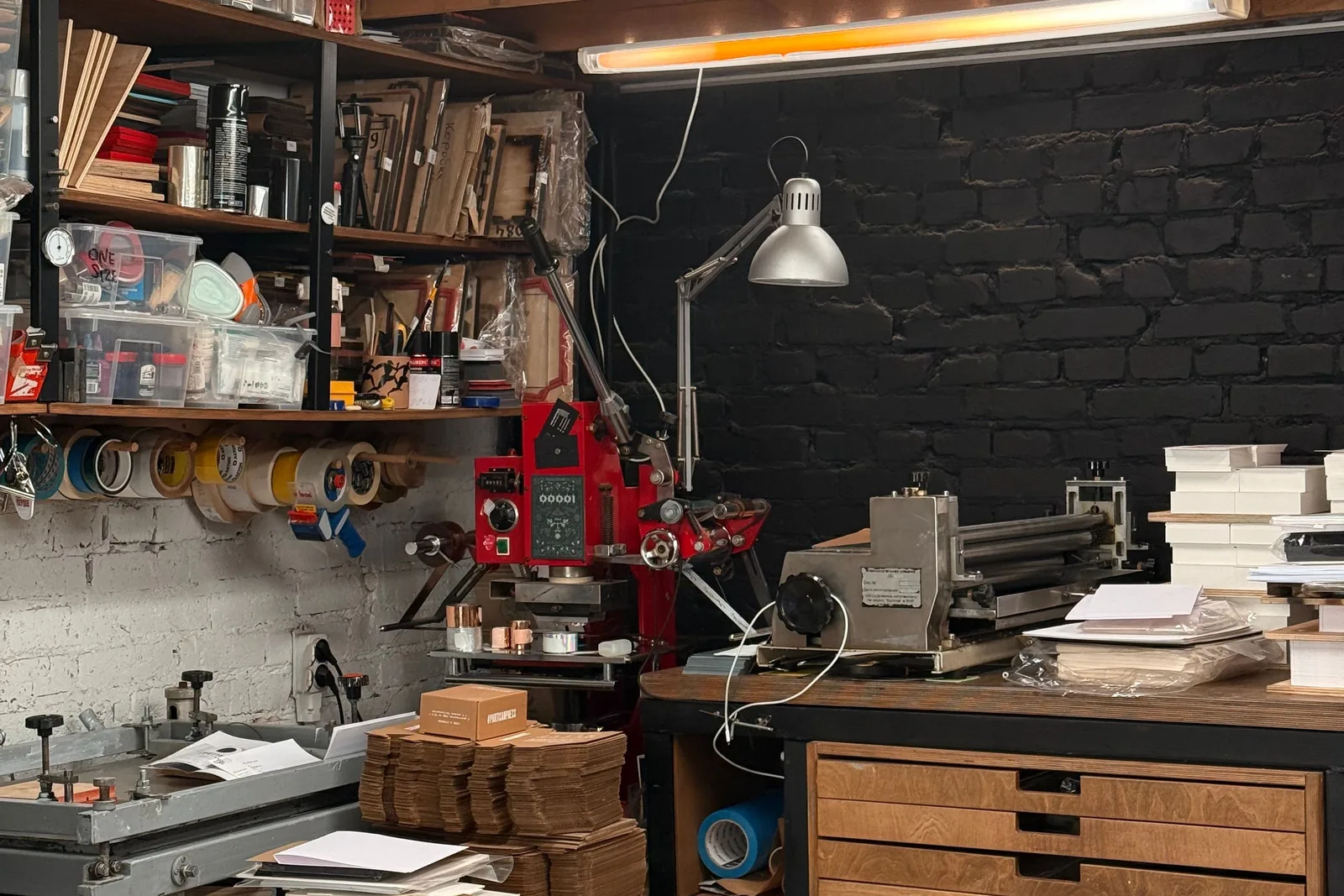
Small brands constantly need packaging, but they often struggle with high minimum-order quantities from large converters. That creates room for local short-run production or finishing: sleeves, simple cartons, inserts, labels, branded tissue, mailer accessories, and prototypes. The strongest small business angle is usually not commodity corrugated boxes at huge volume. It is flexible runs, samples, finishing, kitting, and fast service for customers too small to interest large suppliers.
Start small: Start as a packaging broker or finisher. Sell design, sourcing, short runs, and assembly while outsourcing processes you do not yet own. Add cutting, creasing, printing, or finishing equipment only around proven recurring demand.
Watch-out: Paper converting equipment can become capital-intensive quickly. Material storage, die costs, print quality, waste, minimum material purchases, and freight make this more operationally complex than it first appears.
12. Pet treats
Open the related opportunity →- Best fit
- Repeat consumer purchase
- Test budget
- $1K-$8K
- Space
- Compliant kitchen
- Likely buyers
- Pet owners, groomers, pet shops
Pet treats combine repeat purchase with strong niche branding. A small producer can focus on one animal, ingredient philosophy, format, or local story rather than competing with national pet-food shelves. Groomers, trainers, independent pet stores, subscription boxes, and direct online customers can all become channels. The product is also naturally suited to samples, bundles, and recurring orders.
Start small: Validate the concept with a very small range and interview local pet businesses about what their customers already buy. Build your cost model around finished packaged weight, not ingredient cost alone.
Watch-out: Pet food and treats can be regulated at federal and state levels, and labeling requirements may differ from human food. Shelf life, ingredient safety, claims, and consistent processing deserve professional attention before scaling.
13. Specialty sauces and condiments
Open the related opportunity →- Best fit
- Brandable consumable
- Test budget
- $1.5K-$10K
- Space
- Compliant kitchen
- Likely buyers
- Consumers, restaurants, specialty stores
Hot sauce, finishing sauce, marinade, syrup, dressing, chutney, and other condiments can support strong branding and repeat purchase, especially when the flavor solves a clear use case rather than existing only as a novelty. A local founder can begin through markets, restaurants, specialty stores, or direct online sales and later use a co-packer if demand grows. The best version of this business is a product people use up and come back for.
Start small: Begin with one product and one route to market. Measure batch yield, filling time, packaging, breakage, shipping, and customer repeat rate. Consider professional process review where the product requires it.
Watch-out: Acidification, shelf stability, food safety, labeling, allergens, bottle sourcing, and product-specific processing rules can be significant. This is not a category to scale by recipe intuition alone.
14. Small sewn products
- Best fit
- Flexible niche production
- Test budget
- $1K-$6K
- Space
- Home / studio
- Likely buyers
- Consumers, local businesses, niche retail
Sewing-based manufacturing is flexible because a small studio can produce many useful items with a limited equipment set: aprons, tool rolls, tote bags, pet accessories, fabric organizers, simple uniforms, reusable covers, pouches, and protective sleeves. The opportunity is strongest when you solve a narrow practical problem or serve a local business category, not when you launch another broad fashion label. Patterns can be standardized and small runs can be produced without expensive molds.
Start small: Choose a product with simple construction and low size variation. Make ten units, time every step, and see whether buyers will pay enough to cover real labor. B2B items such as aprons, pouches, or branded accessories can create repeat work.
Watch-out: Labor is often the biggest cost. Complex patterns, sizing, returns, fabric waste, inconsistent operators, and slow finishing can make a product look profitable on materials while losing money on time.
15. Small-batch metal signs and brackets
- Best fit
- Local B2B fabrication
- Test budget
- $5K-$25K+
- Space
- Dedicated workshop
- Likely buyers
- Contractors, shops, local manufacturers
For founders with fabrication experience, small metal products can move Plangate’s manufacturing idea from craft-scale to true local supply. Examples include signs, mounting brackets, simple frames, guards, shelves, fixtures, repair parts, and short-run components. The advantage is proximity: local contractors and businesses often value quick turnaround, small quantities, modification, and the ability to speak directly with the person making the part.
Start small: Start from a narrow capability you already understand. Validate jobs through manual tools or outsourced cutting before investing in larger CNC, plasma, welding, or finishing equipment. Track setup time and material utilization on every job.
Watch-out: This has the highest safety and skill requirement on the list. Welding, cutting, fumes, fire, noise, electrical loads, worker safety, permits, and insurance can all apply. It is a poor first choice if you have no fabrication background.
Best small manufacturing ideas by budget
Budget should narrow your options, but it should not be the only filter. Keep cash available for materials, failed batches, packaging, insurance, customer acquisition, and slow-paying customers instead of spending everything on equipment.
| Starting position | Ideas to investigate | What to prove first |
|---|---|---|
| Under about $2,000 | Candles, small sewn products, entry 3D printing, outsourced label business | Can you win real paid orders with a manual or outsourced process? |
| $2,000-$5,000 | Labels, entry laser, DTF with outsourced transfers, bakery, spices, signage | Does demand repeat enough to justify bringing production in-house? |
| $5,000-$15,000 | Embroidery, stronger laser setup, cold-pressed oil, signage, food equipment | Can your gross contribution support maintenance, labor, and working capital? |
| $15,000+ | Packaging, multi-machine setups, metal fabrication, higher-throughput lines | Do you already have a customer pipeline that can keep capacity busy? |
How to choose the right manufacturing business before you buy equipment
- 1. Choose the buyer before the machine.
Write down exactly who buys the product, how often, what they use today, and why they would switch. “Everyone” is not a buyer segment.
- 2. Validate with the smallest possible batch.
Outsource, rent, borrow, or use manual production when practical. The purpose of the first batch is to learn whether customers pay, not to look like a factory.
- 3. Calculate contribution per order, not just product margin.
Include material, packaging, payment fees, shipping subsidies, rejects, machine consumables, direct labor, and any sales commission. Then ask how many orders are needed to cover monthly overhead.
- 4. Check your local rules early.
The SBA says license and permit requirements vary by business activity, location, and government level. Food, chemicals, fabrication, noise, wastewater, signage, and home-based operations can trigger very different requirements.
- 5. Protect cash for working capital.
A business can be profitable on paper and still run out of cash while waiting for inventory to sell or B2B invoices to be paid.
- 6. Scale only the bottleneck demand proves.
Do not jump from one machine to a production line because a video shows higher throughput. Add capacity when existing orders are regularly constrained by the current setup.
Frequently asked questions
What is the best small manufacturing business to start in 2026?
There is no single best option for everyone. For many first-time founders, custom labels, laser engraving, 3D printing, DTF apparel, embroidery, or other short-run customized products are attractive because demand can be tested without committing to a large factory. Food products can also create repeat demand but usually add more regulatory and shelf-life complexity.
What manufacturing business can I start from home?
Depending on local rules and the space you have, some founders begin with 3D printing, sewing, candles, labels, embroidery, or certain food products. “Possible at home” does not mean automatically legal or suitable: zoning, fire safety, ventilation, food rules, noise, insurance, and customer traffic can all matter.
Which manufacturing business needs the least investment?
Simple candles, sewn products, small 3D-printing setups, and label businesses that initially outsource printing can often be tested with less capital than food-processing, packaging, or metal fabrication. The better question is how cheaply you can validate paid demand before buying specialized equipment.
Do I need a factory to start a manufacturing business?
No. Census data shows a large share of U.S. manufacturing establishments have very few employees. Many businesses begin in small commercial units, workshops, garages, studios, or compliant home spaces and move only when volume, safety, zoning, or process requirements demand it.
Is a small manufacturing business profitable?
It can be, but the machine alone does not create profit. Profit depends on selling price, capacity utilization, material cost, direct labor, rejects, customer acquisition, packaging, freight, maintenance, overhead, and working capital. Validate the economics for the specific product and location rather than relying on generic profit-margin claims.
How much should I spend on machinery at the beginning?
Spend as little as needed to prove repeatable demand and acceptable quality. Where possible, use outsourcing or a basic machine first. Keep cash for materials, packaging, repairs, sales, permits, insurance, and several months of operating uncertainty.
Sources and methodology
This article uses public U.S. sources for manufacturing scale and regulatory context. Startup ranges are Plangate screening estimates for small test configurations and should be verified with current local quotes and requirements.
- U.S. Census Bureau - 2023 County Business Patterns, Manufacturing (NAICS 31-33)
- U.S. Small Business Administration - Apply for licenses and permits
- U.S. Small Business Administration - Putting American manufacturers first
- NIST Manufacturing Extension Partnership - resources for small and medium manufacturers
- U.S. Food and Drug Administration - How to Start a Food Business
- U.S. EPA - Quick Tips Guide for Small Manufacturing Businesses