Budget
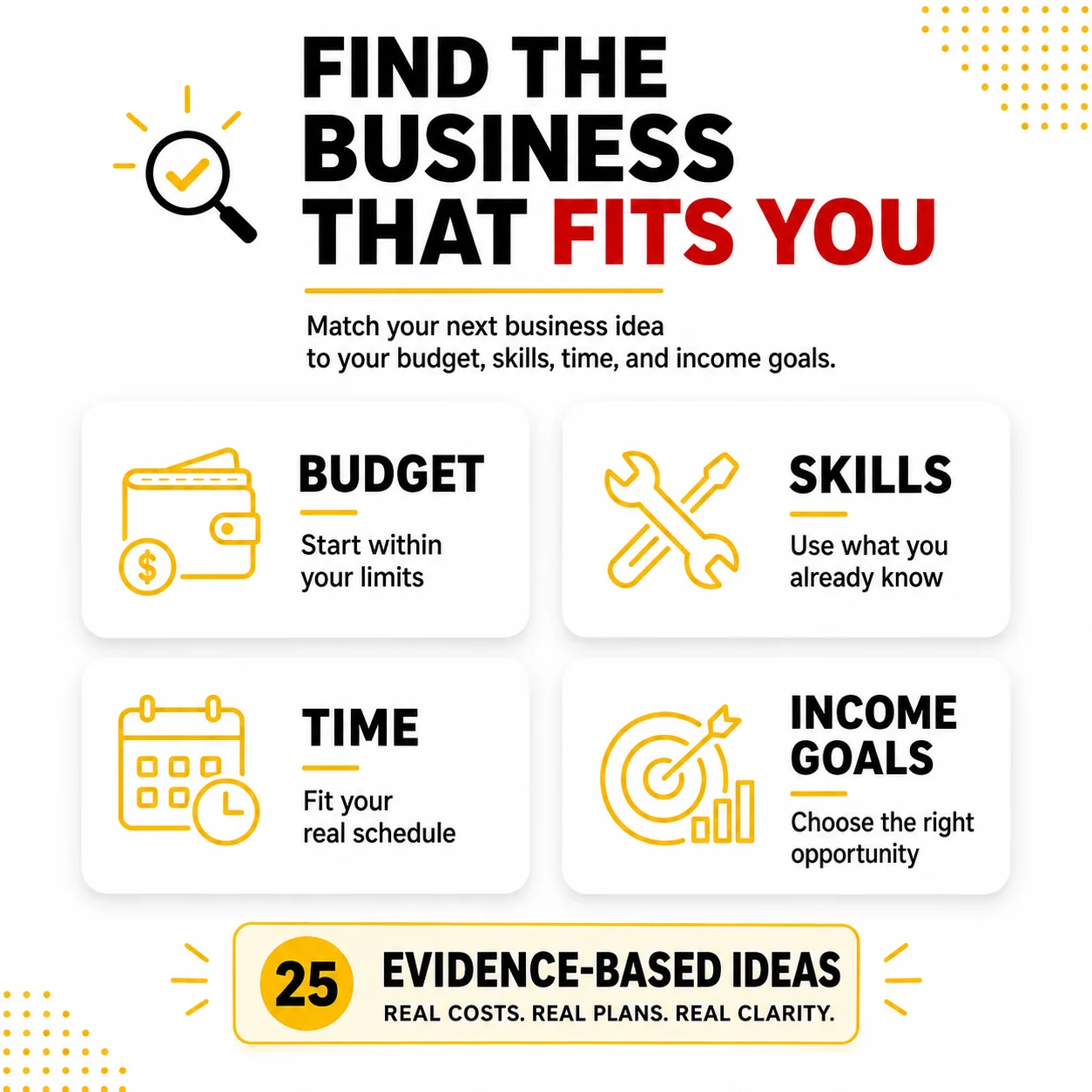
How much can you afford to risk without creating financial strain?

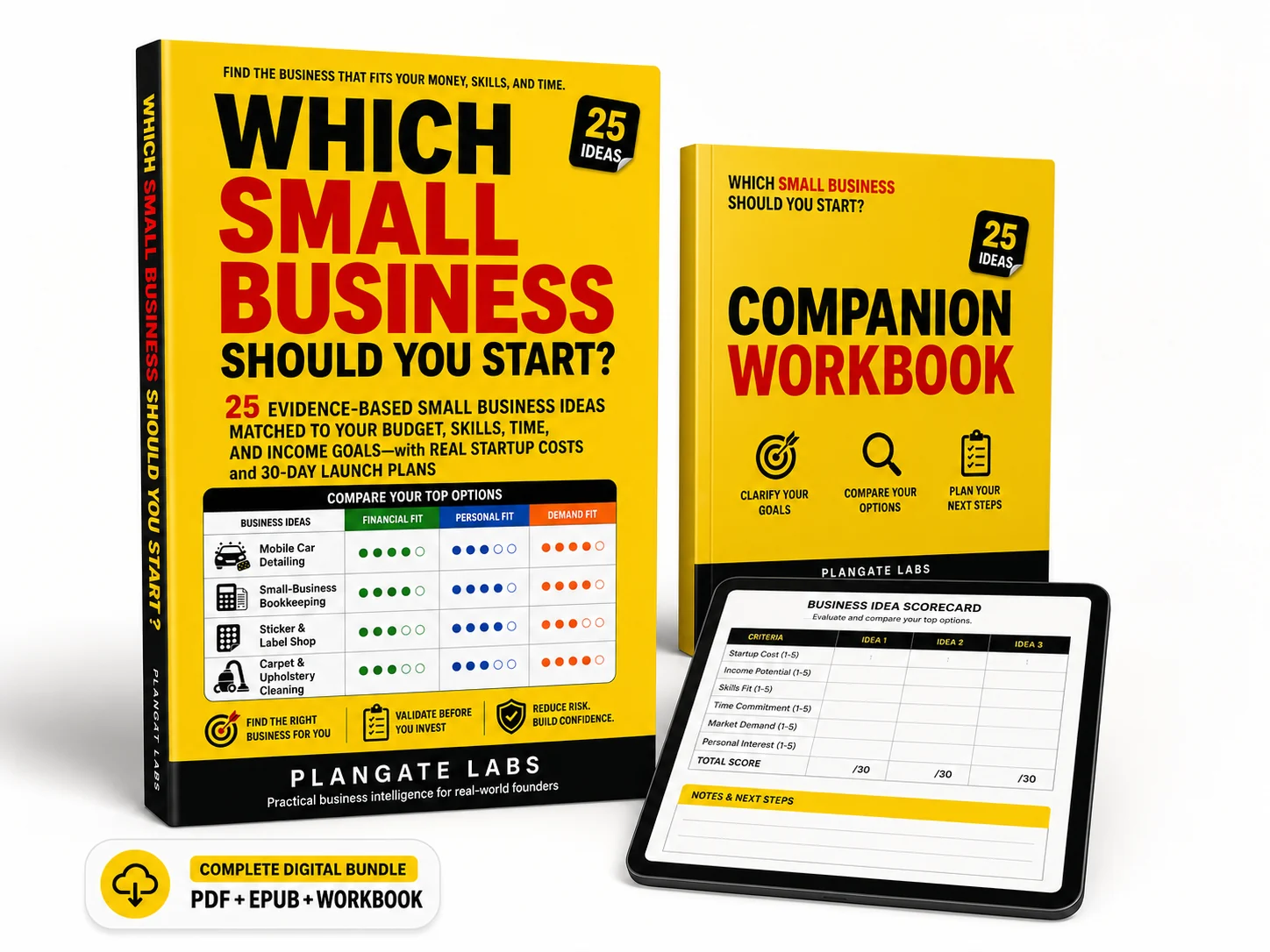
25 evidence-based small business ideas matched to your budget, skills, time, and income goals—with realistic startup-cost guidance and 30-day launch plans.
How much can you afford to risk without creating financial strain?
What can you already do well, and what are you prepared to learn?
How many hours can you realistically commit each week?
Are customers already paying for this solution or a close alternative?
What does the business need to become financially worthwhile for you?
Begin with the amount you can responsibly put at risk, not the maximum credit available to you. Separate one-time startup costs from recurring expenses. A smaller test is often more useful than a larger launch because it lets you learn before costs become difficult to reverse.
List the skills the work actually requires: production, sales, customer service, bookkeeping, scheduling, technical operation, or design. Distinguish skills you already have from skills that need substantial practice or certification.
Use the hours you can consistently protect, not an ideal schedule. Include setup, sourcing, sales, delivery, administration, and follow-up—not only the time spent making the product or performing the service.
Demand is stronger than attention. Stronger evidence comes from people taking a meaningful next step: requesting a quote, joining a waitlist, booking a call, paying a deposit, placing a preorder, or buying a small pilot offer.
Estimate the complete cost of serving the first customer, including packaging, payment fees, waste, travel, permits, safety equipment, and rework. Treat published figures as planning guidance and verify current quotes.
Identify where those customers already gather, what triggers the purchase, how often they buy, and why they would choose a new provider. A focused local or B2B offer may benefit from direct outreach and repeat relationships.
Define one customer, one offer, one price, and one measurable signal that would justify continuing. Record what people do, not only what they say. Validation reduces avoidable risk; it does not guarantee success.
Can the business work within your available budget and financial expectations?
Does it match your skills, time, preferences, and working style?
Is there evidence of a real customer need worth validating?
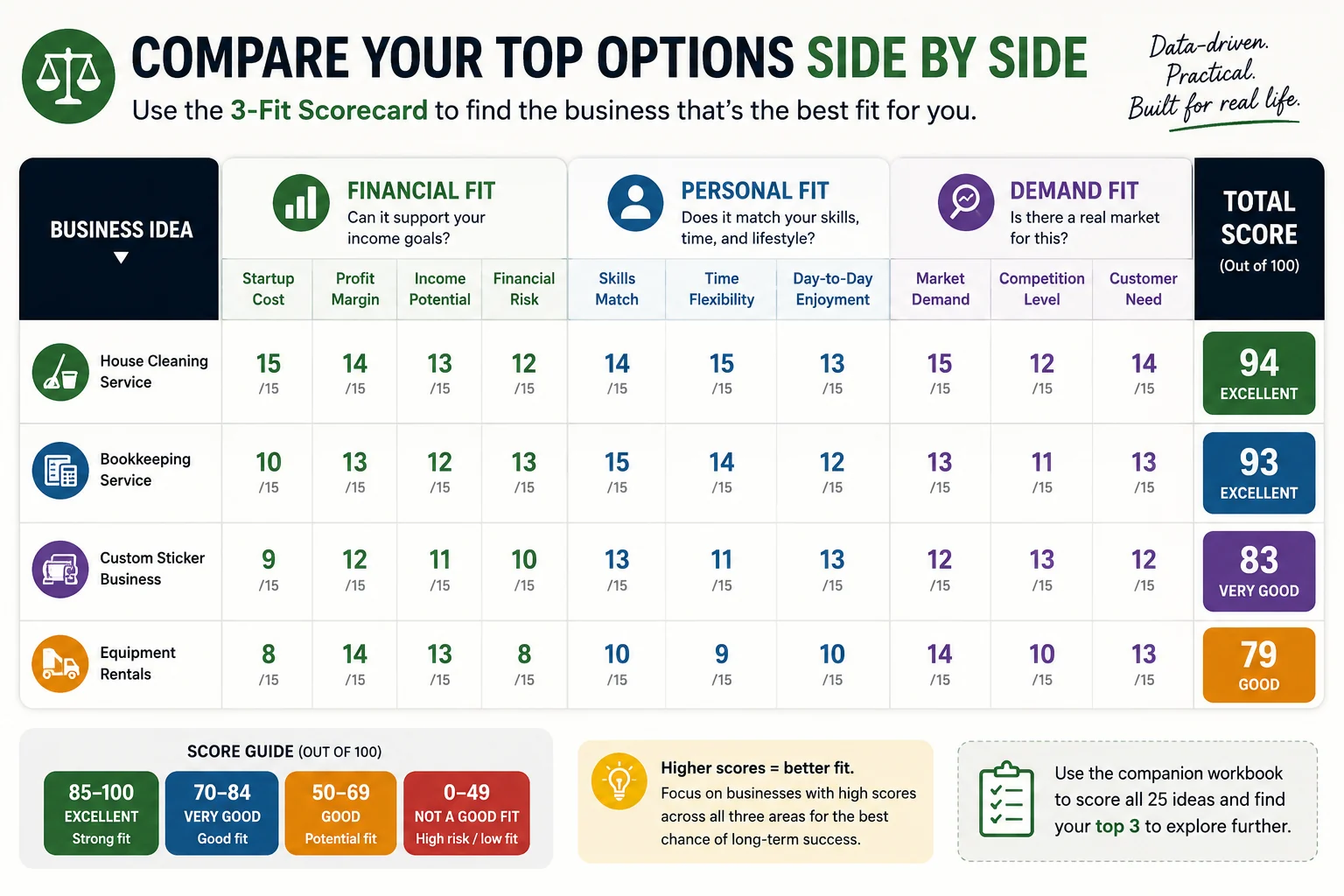
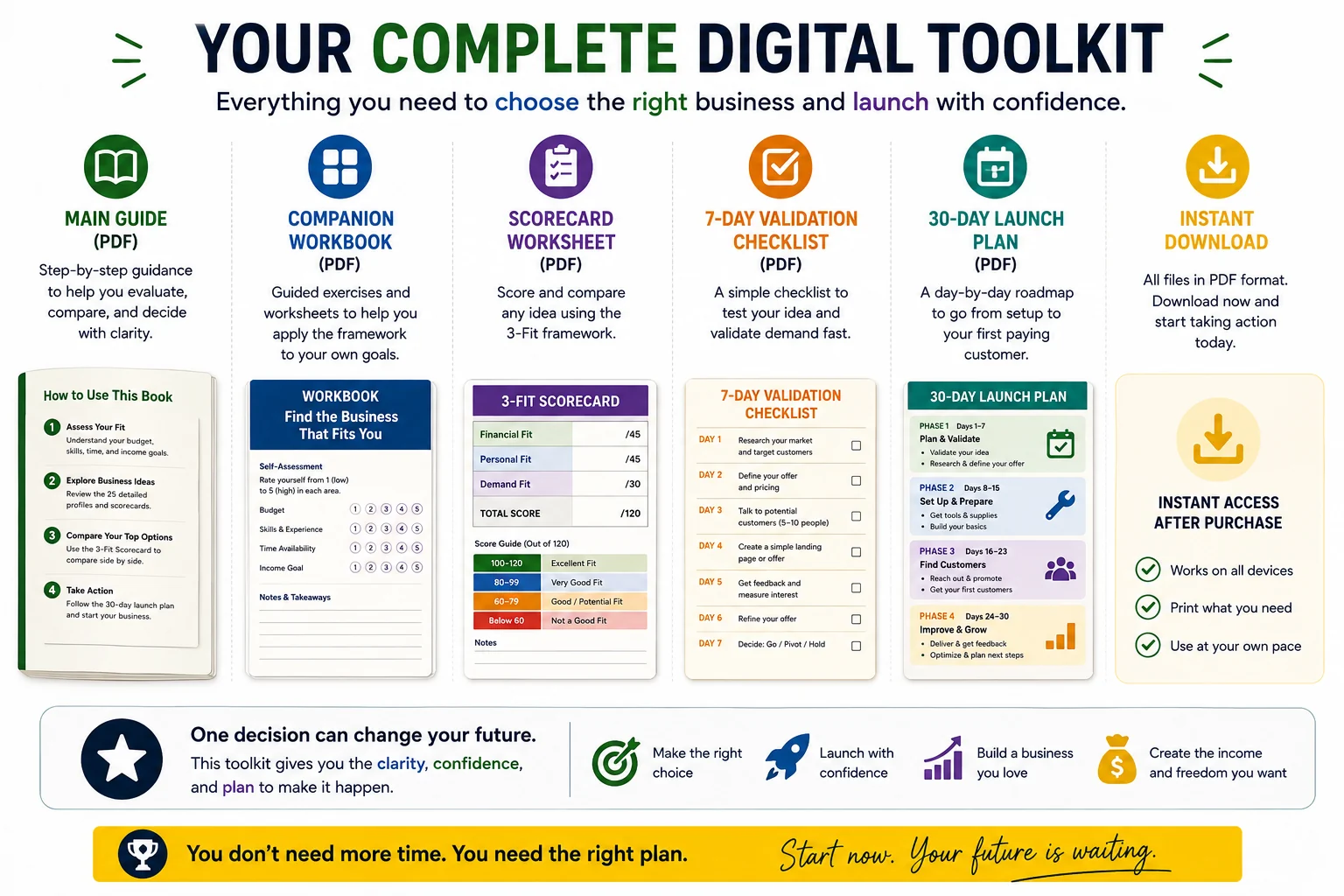
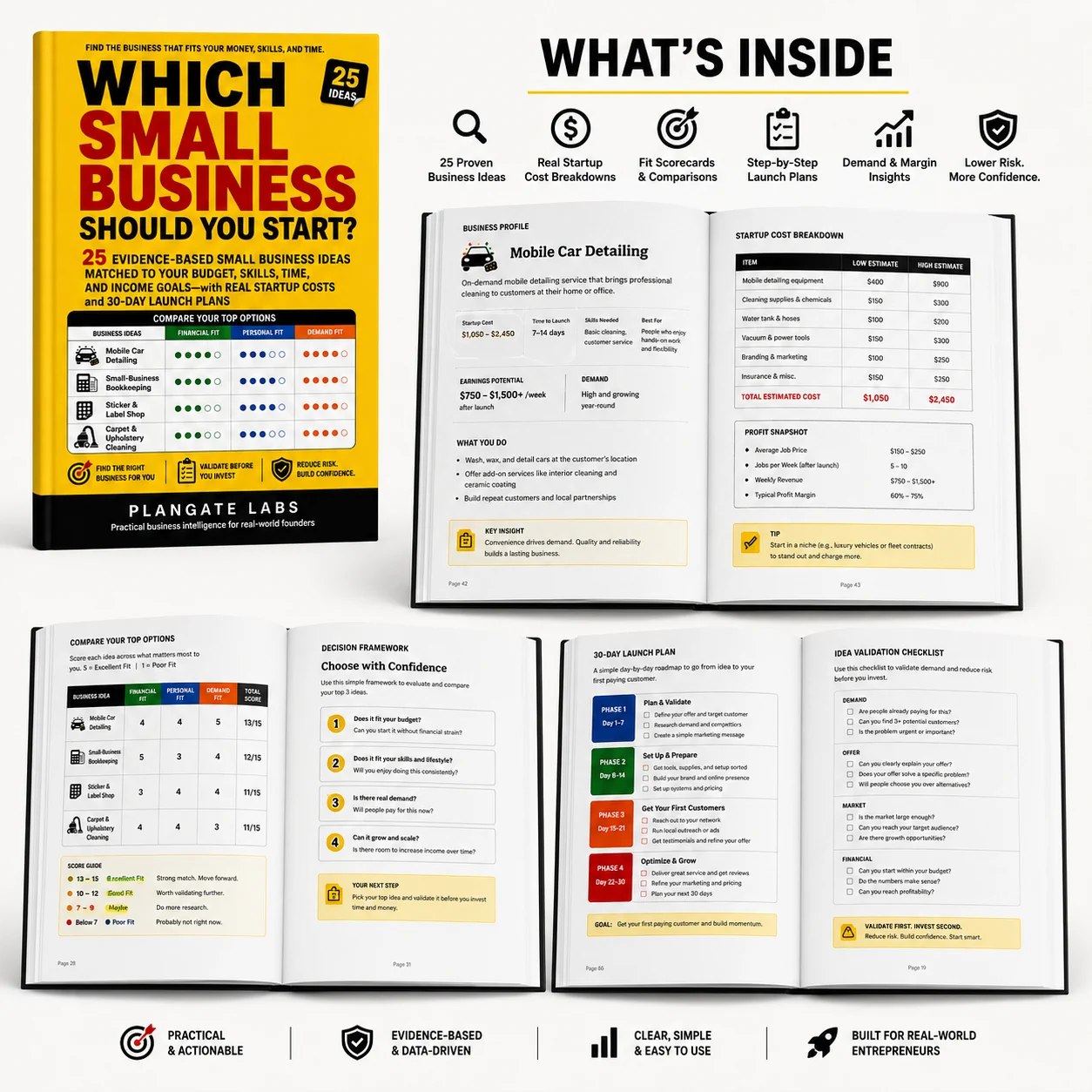
Use the book to compare, the scorecards to shortlist, and the workbook to make the decision explicit.
Start with an idea that fits your current budget, transferable skills, available time, and access to potential customers. A beginner-friendly business is not simply the easiest idea on a list; it is one you can test responsibly, explain clearly, and begin learning without a large irreversible commitment. The guide helps you compare 25 options using those practical constraints.
Shortlist ideas that fit your financial limits and working style, then compare their startup requirements, customer need, operating demands, and income model. The 3-Fit framework in the guide organizes that comparison into Financial Fit, Personal Fit, and Demand Fit so you can decide which options deserve real-world validation.
A good low-cost business is one whose smallest responsible test fits your budget and lets you gather useful customer evidence before spending heavily. The right option depends on your skills, schedule, location, and customer access. The book includes different business models so you can compare low-cost possibilities without assuming one answer fits everyone.
There is no universal minimum. Startup costs vary widely by business model, equipment, inventory, insurance, licensing, location, and the size of your first test. The guide provides realistic startup-cost guidance to help you estimate and compare options, but you should verify current prices and local requirements before committing money.
Define a narrow offer, identify the likely customer, research alternatives, test pricing and interest, and look for evidence stronger than compliments. That might include qualified conversations, sign-ups, deposits, preorders, or a small paid pilot where appropriate. The goal is to test customer demand and your assumptions before taking on larger startup costs.
The purchase includes three files: the complete Which Small Business Should You Start? guide as a PDF, a reflowable EPUB edition, and the companion workbook as an XLSX spreadsheet.
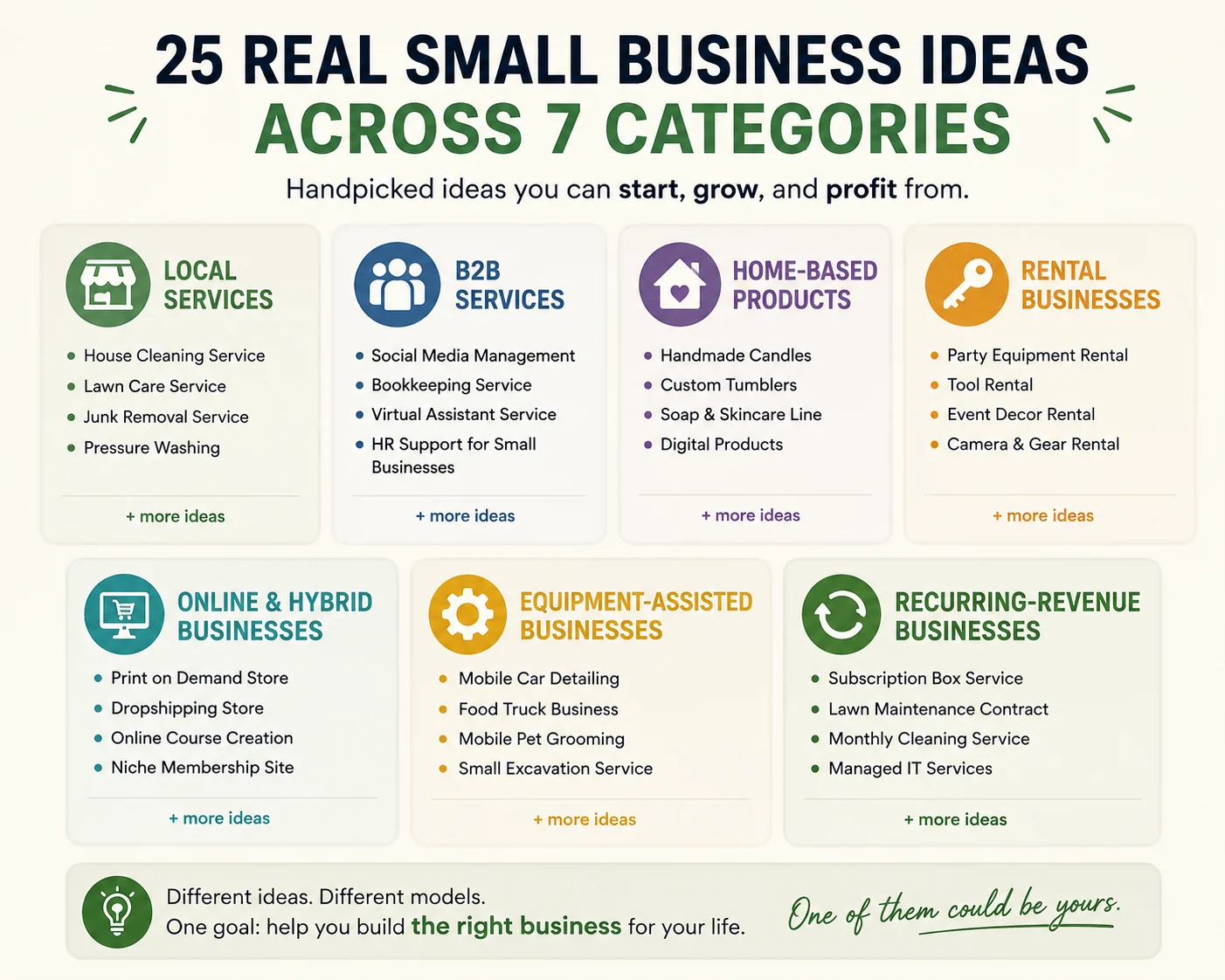
The guide covers 25 evidence-based small business ideas across several business models, including service, home-based, B2B, online or hybrid, rental, equipment-assisted, and recurring-revenue opportunities.
Yes. The guide includes realistic startup-cost guidance and cost breakdowns to support comparison. Costs can change by location, supplier, scale, and timing, so they should be treated as planning guidance and verified before purchase decisions.
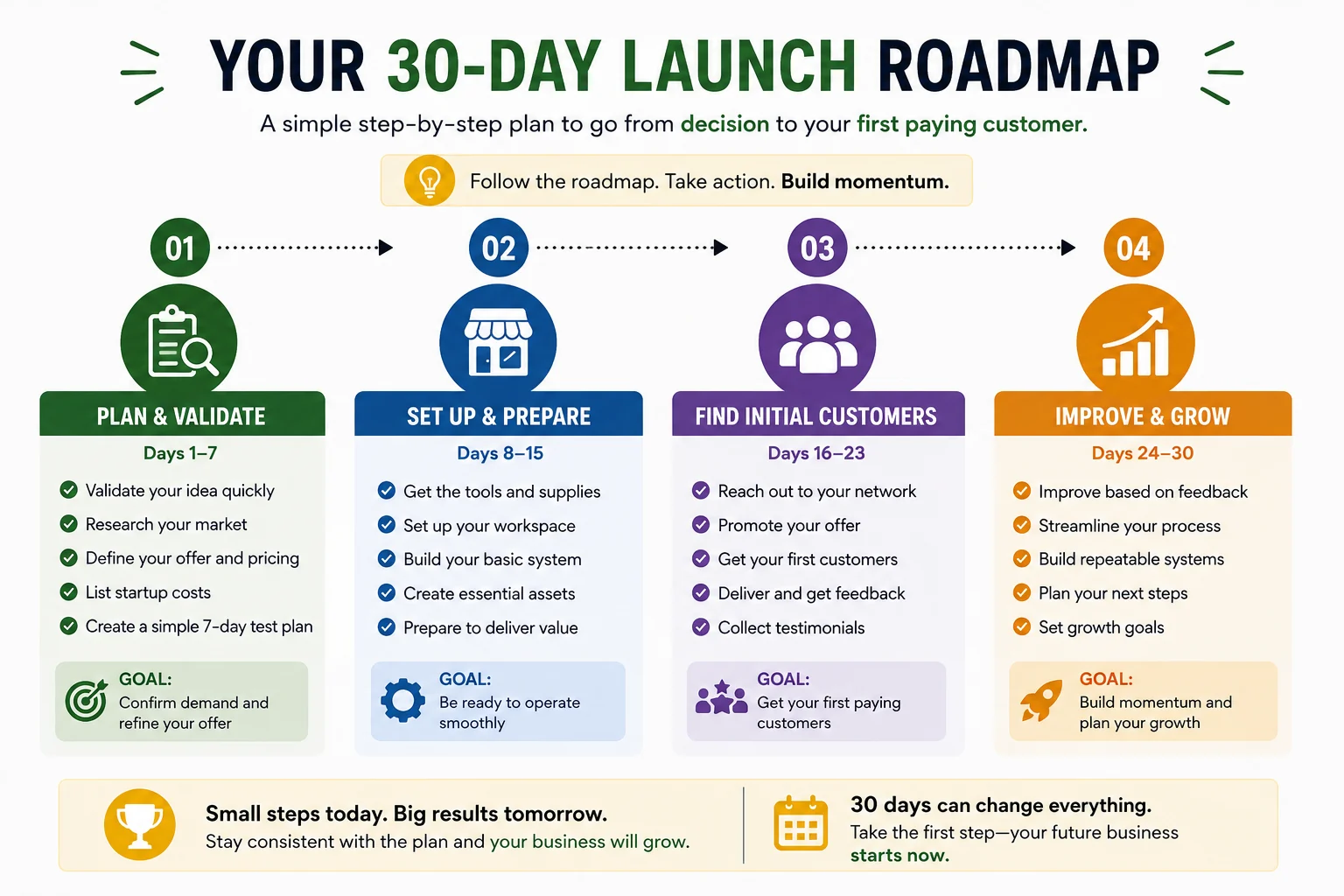
Yes. The guide includes practical 30-day launch plans organized around four stages: Plan & Validate, Set Up & Prepare, Find Initial Customers, and Improve & Grow. The plan provides structure; it does not guarantee customers or business results.
No. This is a digital-only bundle. No physical book is shipped.
Lemon Squeezy handles the secure checkout and digital delivery. The PDF, EPUB, and XLSX workbook are made available after your one-time purchase.
Yes. The PDF works on common desktop, tablet, and mobile PDF readers. The EPUB is designed for compatible ebook apps and readers. The XLSX companion workbook works best in spreadsheet software that supports Excel files.